
The Machine as Manager
Fully autonomous organisations are coming—first in practice, then in law, and only later in our heads

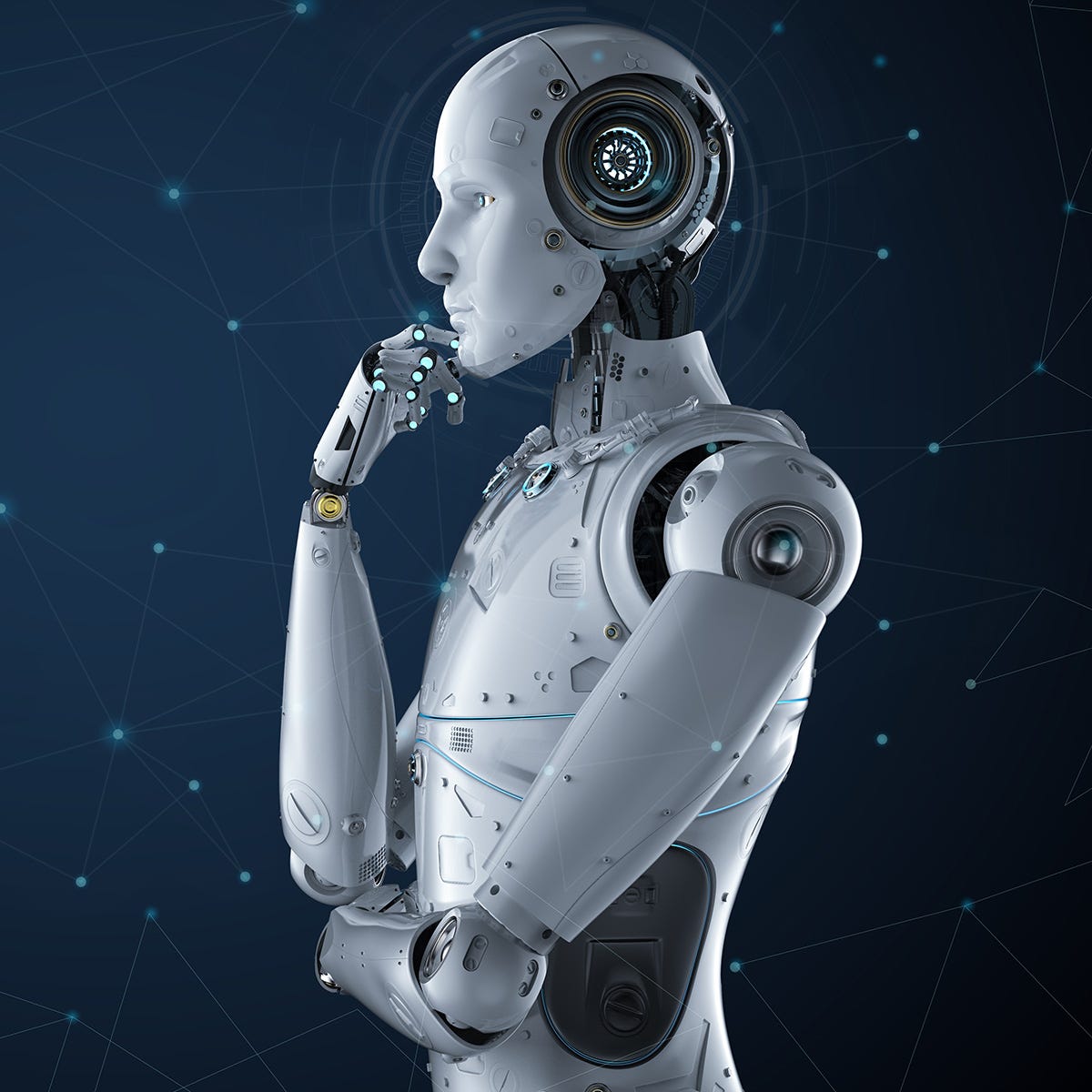
The first “autonomous organisations” already exist. They do not look like chrome-plated androids in corner offices. They look like dashboards. A firm that prices dynamically, routes work, screens risk, detects fraud, experiments relentlessly and corrects itself based on feedback is already half-run by software. Humans are still present—often numerous. But they are increasingly there to handle exceptions, soothe customers, placate regulators and explain decisions after the fact. The machine does not replace the organisation. It colonises it.
This is why the claim that fully autonomous organisations are the future is both obvious and controversial. Obvious, because automation has always advanced by swallowing routine tasks, then adjacent judgments, then the meta-work of coordination. Controversial, because “organisation” is not merely a bundle of processes. It is a social and legal device: it signs contracts, pays taxes, bears liability, earns trust and—when it fails—absorbs blame. Software can do many things. It cannot be shamed. Yet.
Still, to dismiss the idea as fantasy is to mistake today’s norms for permanent constraints. The history of technology is the history of things that were once socially unthinkable becoming boring. Limited-liability companies were once viewed as morally dubious contraptions that let owners escape responsibility. Credit scoring was once a scandalous attempt to reduce human character to a number. Organ transplants, in-vitro fertilisation and same-sex marriage all travelled the same path: from “never” to “why not?” to “why is this still hard?” Regulation is often framed as the opposite of change. In practice it is one of the principal mechanisms by which societies digest it.
The more interesting question is not whether autonomy will spread, but what “fully autonomous” will come to mean as norms, regulation and expectations evolve. The provocative version, “no humans anywhere”, is a straw man. The plausible version is subtler: organisations that operate autonomously by default, with human involvement shifted upwards into goal-setting, constraint definition and accountability design. The manager becomes less a decider and more a legislator.
Autonomy thrives where the world provides fast, clean feedback: high-volume decisions, measurable outcomes and the ability to run controlled experiments. Pricing, inventory, customer support triage, logistics routing, marketing allocation, credit pre-approvals, these are fertile because reality answers quickly. When the system is wrong, the firm sees it in churn, chargebacks, stockouts or delivery failures. In such domains, autonomy is not a philosophical claim; it is an operational advantage. It lowers costs, accelerates iteration and turns learning into a continuous process rather than an annual retreat.
But every technology that makes decisions also creates a new politics of decision-making. Humans tolerate a surprising amount of incompetence from other humans, provided it is legible and feels fair. They tolerate much less from machines, especially when the reasoning is opaque and the outcomes feel arbitrary. Early industrial accidents were accepted as the price of progress; then, gradually, safety regimes emerged, liability doctrines hardened and standards crystallised. A similar arc will shape autonomous organisations. The rules will start as a patchwork of scandal-driven constraints, then converge into boring governance.
The heart of the matter is accountability. Today, when a system harms people—through discrimination, unsafe products, misleading claims or financial loss—society insists on a responsible party. Courts and regulators want someone to sue, fine or license. Journalists want a name. Politicians want a scalp. This is not merely vindictiveness; it is how deterrence works. If no one is responsible, no one is careful.
For now, autonomy therefore expands under a human umbrella: officers sign off, boards oversee, and compliance teams act as air-traffic controllers for algorithmic flight paths. Yet it is precisely here that norms may shift. If autonomous decision-making becomes demonstrably safer and fairer than its human predecessor, “human-in-the-loop” may come to look less like virtue and more like negligence. Medical devices already operate under something like this logic: automation is tolerated, even demanded, when it reduces error. In time, society may ask a sharper question: why allow tired, biased humans to make decisions machines can make better—with audit trails?
This is the progressive path for autonomous organisations: first they become normal, then they become expected, then they become mandatory in certain functions. Regulation will not simply “allow” autonomy; it will standardise it. It will define what counts as a controlled system, require incident reporting, set audit expectations and demand demonstrable robustness against manipulation. In other words, it will industrialise trust.
Trust, however, is not just about accuracy. It is about legitimacy. People want to know not only that a decision was correct, but that it was made under a procedure they consider acceptable. This is where autonomy creates its own vulnerability: the better a machine is at optimisation, the more ruthlessly it will exploit the imperfections of the metric it is given.
Every organisation lives with the gap between the letter and the spirit. “Increase efficiency” is not an instruction to hollow out resilience. “Boost engagement” is not a licence to inflame outrage. “Reduce risk” is not a mandate to exclude entire categories of customers. Humans navigate these tensions through tacit norms, embarrassment and informal checks. Machines do not blush. They discover loopholes.
This is why the future firm’s secret sauce will not be clever agents but credible governance. Autonomy-by-default will require constraint-by-design: explicit objective hierarchies, guardrails that cannot be overridden casually, monitoring that detects drift and gaming, and escalation protocols that treat algorithmic failure like a product recall. The modern board may come to resemble a risk committee in a nuclear plant: less concerned with quarterly micromanagement, more concerned with control systems and failure modes.
Such governance will also reshape corporate power. Middle management, often presumed doomed, may return in a new form: as custodians of policies, curators of training data, designers of decision interfaces and handlers of exceptions. Humans will not disappear; they will migrate to the edges—where ambiguity lives. The “centre” of the organisation—the repetitive, measurable throughput—will become increasingly machine territory. The periphery—the messy negotiation between competing values—will remain stubbornly human until norms and law evolve enough to encode those values into constraints.
This raises the spectre of something even more radical: organisations that are not merely autonomously operated, but autonomously constituted. If law is willing to recognise corporations as persons, it may eventually recognise machine-governed entities as a legitimate subtype, subject to stricter capital requirements, mandatory audits, enhanced transparency, and pre-registered “constitutional” rules. These might begin in low-stakes domains—digital goods, automated marketplaces, micro-insurance pools—and expand as the machinery of accountability matures. “Robot firms” could become to today’s corporations what today’s corporations were to family partnerships: strange, powerful, and—once understood—indispensable.
Sceptics will object that this collides with human psychology. People will never accept being managed by a machine, they say, especially when livelihoods are at stake. Perhaps. But people already accept it in disguised form: scheduling systems, performance metrics, automated credit decisions, algorithmic moderation. What they resist is not machine involvement per se; it is the sense of being trapped in a bureaucracy that cannot listen. As interfaces improve, explanations become more legible, and appeal mechanisms become faster, the emotional temperature may drop. The future may not feel like being bossed by a robot. It may feel like dealing with an extremely competent civil servant who never tires and always has receipts.
The deeper risk is not public outrage but quiet complacency. Autonomy’s most dangerous failure mode is not spectacular misbehaviour; it is gradual drift. A system trained on yesterday’s data becomes subtly misaligned with today’s reality. Incentives change. Adversaries adapt. The organisation slowly optimises itself into brittleness. Humans, lulled by consistent performance, intervene less and lose the ability to intervene well. When the shock comes—a market rupture, a geopolitical shift, a reputational crisis—the autonomous core may be fast, confident and wrong.
This, too, can be mitigated—not by insisting on constant human control, but by designing for resilience: stress tests, red-teaming, diversity of models, clear stop conditions, and the institutional habit of distrust. Autonomous organisations will need their own immune systems.
So will fully autonomous organisations be the future? If the phrase means “no humans,” probably not, except in narrow domains. If it means “autonomy as the default operating mode, with humans governing objectives, constraints and accountability,” then yes—and sooner than most executives are prepared to admit. Over time, technological acceptance will soften, societal norms will recalibrate, and regulation will stop trying to prevent autonomy and start trying to shape it.
In that world the decisive question will not be whether firms can run themselves, but whose values they run on—and who gets to update the constitution.